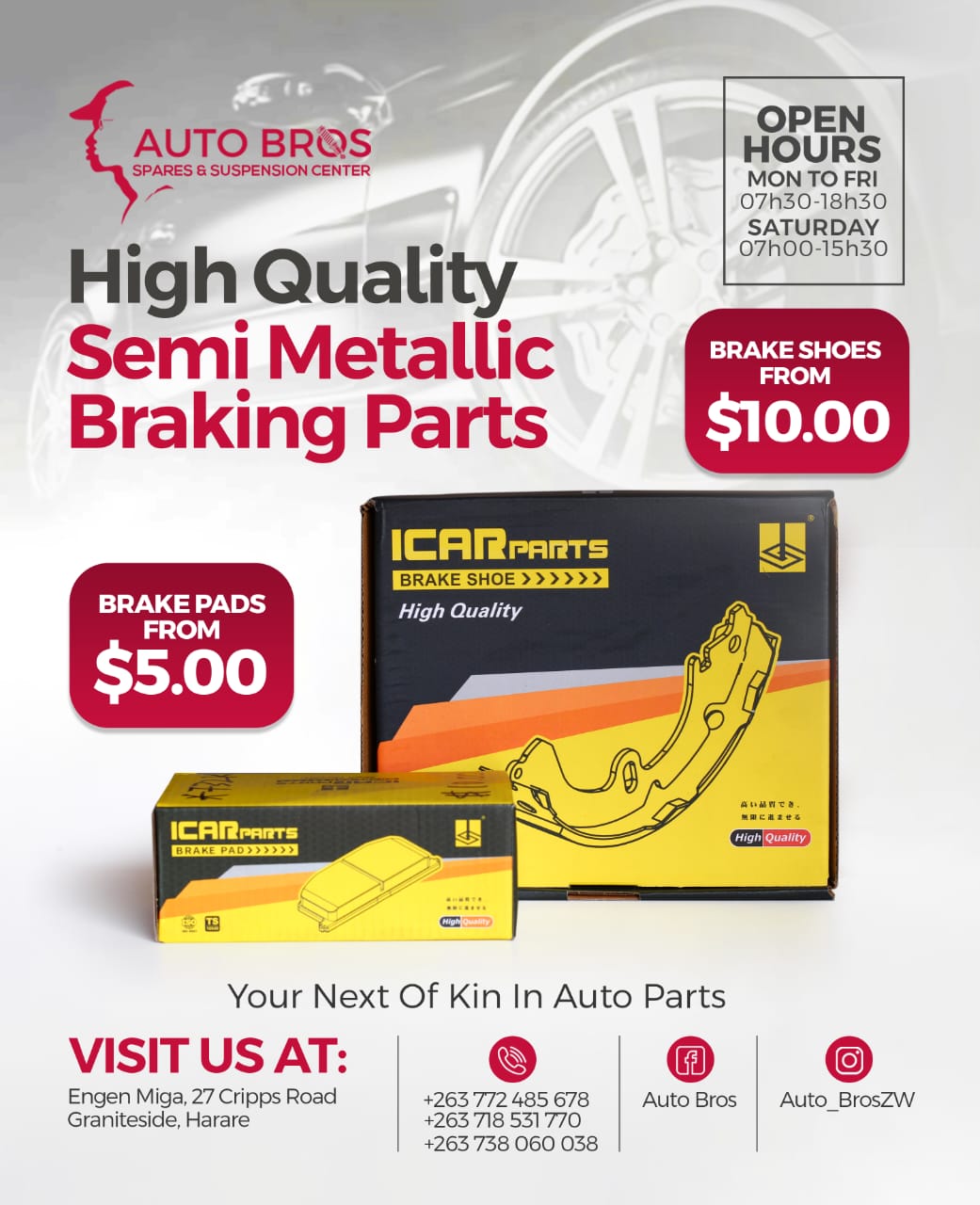
Your brakes are the most important safety system on your vehicle. Catching worn brake pads early saves money, prevents damage to discs, and keeps you safe on Zimbabwe's roads — from city traffic in Harare to long stretches on the highway.
Here are five practical signs that it is time to replace your brake pads.
1. Squealing or screeching when you brake
Most brake pads include a small metal wear indicator. When the pad material gets thin, this tab contacts the disc and makes a high-pitched squeal. If you hear it regularly (not just once after rain), book an inspection soon.
2. Grinding or metal-on-metal sound
A deep grinding noise usually means the pad material is gone and metal is rubbing on the disc. Stop driving and replace pads immediately — you may already need new discs as well.
3. Longer stopping distances
If the pedal feels soft, you need more pressure than usual, or the car takes longer to stop, worn pads (or low brake fluid) could be the cause. Test this carefully in a safe, empty area — never ignore a change in braking feel.
4. Vibration or pulsing through the pedal
Shuddering under braking can mean uneven pad wear or warped discs. Pads alone might fix it if caught early; leave it too long and disc replacement adds to cost.
5. Visual check — less than 3 mm of pad left
If you can see the pad through the wheel spokes, look for thickness. Rough rule: if the friction material is thinner than about 3 mm (roughly two stacked 1-cent coins), replace the set. Front pads usually wear faster than rear ones because they do most of the work.
What to do next
• Match pads to your vehicle make, model, chassis number, engine number and engine size — generic "one size" kits often fit poorly or wear quickly.
• Replace pads in axle sets (both front or both rear) for even braking.
• After fitting, bed in new pads with gentle stops for the first 200–300 km.
Not sure which pads fit your car? Search by registration or VIN on Auto Bros, or visit us with your vehicle details — we will help you get the right OEM-quality parts the first time.